1 Two Highways Out of History
Just after dawn on 7 August 1995, Croatian MiG-21s rocketed a tangle of tractors, Yugos and horse-carts packed with Serb civilians on the Petrovačka cesta. Nine were killed on the spot, four of them children; dozens more bled beside the roadside tomatoes they had stuffed into pillowcases before fleeing. Within forty-eight hours almost 200,000 Krajina Serbs—virtually the entire population of the self-declared Republika Srpska Krajina—had crossed into Bosnia. Human Rights Watch later documented 526 Serb deaths, 116 of them civilians, and villages systematically torched after the flight.
At 10 a.m. on September 19, 2023 the first Bayraktar drone struck an Armenian trench line in Artsakh/Nagorno-Karabakh; by lunchtime the Republic of Artsakh/Nagorno-Karabakh capitulated. A week later more than 100,000 Armenians tramped or drove across the Lachin corridor—the only road to Armenia—after a nine-month blockade that had already emptied grocery shelves and hospital oxygen tanks.
Two wars, thirty years apart—same filter-less photograph: taillights stretching to the horizon and flags abandoned in the dust.
2 Roots in Empire—and in Fear
Both enclaves were born from the carcasses of multinational federations.
- Krajina, once part of the Habsburg Military Frontier, became a Serb-majority belt inside socialist Croatia. When Zagreb bolted from Yugoslavia in 1991, local Serbs proclaimed their own republic, certain that an independent Croatia would mirror the fascist puppet state that had massacred their grandparents in 1941.
- Karabakh, an ethnically Armenian enclave handed to Soviet Azerbaijan in 1921, petitioned for union with Armenia as the USSR crumbled. Baku’s revocation of the oblast’s autonomy in 1991 convinced local Armenians they faced cultural eradication.
Self-determination, then, began less as irredentist romance than as existential insurance.
3 Peacekeepers on Paper—or None at All
Croatia hosted 14,000 UNPROFOR troops in four “UN Protected Areas.” They maintained cease-fire lines, logged mortar craters—and stepped aside when Zagreb launched Operation Storm in August 1995.
Artsakh/Nagorno-Karabakh never saw a blue helmet. The conflict’s diplomacy hung on the OSCE Minsk Group, a talk-shop co-chaired by Paris, Moscow and Washington; it’s only peacekeepers were 1,960 Russian soldiers inserted after the 2020 war. When Azerbaijan reopened hostilities in 2023, Russian troops filmed the exodus but did not fire a shot. They withdrew entirely in April 2024 as Moscow diverted forces to Ukraine.
Lesson: a badge without bold rules of engagement is camouflage; no badge at all is permission.
4 When Geopolitics Chooses Sides
- Croatia was the EU’s would-be success story. Brussels made one demand—hand General Ante Gotovina to The Hague—and Croatia complied, clearing the runway for membership in 2013. The Serb exodus slipped into the footnotes of enlargement speeches.
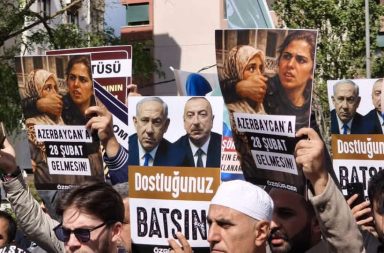
- Azerbaijan became Europe’s favorite gas station. In July 2022 the EU signed a memorandum to double Azeri gas deliveries to 20 bcm by 2027, just as the bloc scrambled for non-Russian energy. The pact stayed intact while Lachin remained sealed and bombs fell on Stepanakert.
Realpolitik is nothing new, but the clarity is bracing: pipelines outrank people.
5 Warfare, Evolving—Indifference, Constant
Croatia’s blitz relied on Cold-War artillery plus NATO intelligence. Azerbaijan’s relied on Turkish-made Bayraktar TB2 drones that loitered, filmed and destroyed Armenian armour with near-cinematic precision. Yet hardware only hastened an outcome already shaped by global shrugging: a nine-month humanitarian siege met with statements, not airdrops.
6 After the People, the Stones
Krajina’s Orthodox churches still stand roofless, their frescoes bleaching under Balkan winters while restitution cases crawl through Zagreb courts. HRW calls the pattern “impunity for abuses.”
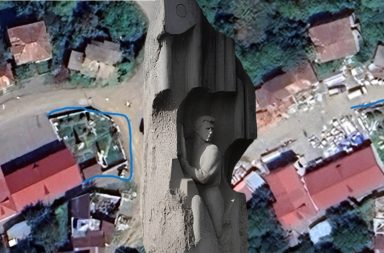
In Artsakh/Nagorno-Karabakh, UNESCO has requested since 2020 to send experts to catalogue Armenian monasteries; Baku has not approved a single visit. Each month without access raises fears of a repeat of the 2005 destruction of the medieval Julfa khachkar cemetery—an erasure visible only in satellite images.
Stones, like refugees, need guardians, not communiqués.
7 Why the World Should Worry
Krajina and Karabakh are not anomalies; they are rehearsals.
Smoldering “ghost republics” dot the map—from Transnistria to Abkhazia to eastern Ukraine before 2022. Each contains people who still believe ballots can outweigh bullets—until the next lightning offensive proves otherwise. Every unpunished cleansing teaches the lesson that sovereignty equals might and minority rights expire at the range of a drone.
8 How to Break the Cycle
- Hard-wired humanitarian corridors
Create a standing, multinational battalion with a Chapter VII mandate to open roads when sieges threaten civilians. A credible trip-wire deterred attacks in Macedonia in 2001; its absence doomed Lachin. - Sanction energy, not just generals
Gas contracts, port deals, and pipeline insurance should carry automatic suspension clauses when the seller blocks food or medicine to civilians, or defies binding ICJ orders—as Azerbaijan did in 2023. - A global cultural “red list”
Any state refusing UNESCO inspection of endangered heritage triggers visa bans and asset freezes on senior officials. Antiquities traffickers face such penalties already; cultural obliterators should too. - Transparent criteria for remedial recognition
A provisional international protectorate—or at minimum UN trusteeship—should be on the table when an enclave demonstrates pluralist governance and faces credible extermination risk. Selectivity is inevitable; secrecy should not be. - Reconstruction funds pegged to return rates
Tie post-war aid to verified, safe repatriation. EU money rebuilt Knin’s railway but not the lives of the displaced Serbs; do not let Karabakh’s “reintegration grants” repeat the same mistake.
9 A Closing Plea
The year is 2025. On the slopes above Stepanakert, apricot trees that once perfumed the town are wild and unpicked. In Croatia’s Lika region, wolf packs den in the barns of villages where church bells no longer ring. These absences will outlast this news cycle, these editorials, perhaps even the next generation’s textbooks.
We can keep composing elegies after each convoy departs, or we can rewrite the rules before the engines start. The ghosts of Krajina and Karabakh, and those who may yet join them, are watching the choice we make.
Sources
- HRW, “Impunity for Abuses Committed during Operation Storm,” Aug 1996 – displacement & death tolls.
- Wikipedia, “Bosanski Petrovac refugee column bombing,” casualty details.
- UNPROFOR background note (UN Peacekeeping).
- Politico, “Russia will pull out all of its troops from Karabakh,” 17 Apr 2024.
- EU–Azerbaijan Energy Memorandum, 18 Jul 2022.
- OHCHR press release, “UN experts urge Azerbaijan to lift Lachin blockade,” 7 Aug 2023.
- Al Jazeera, “Nagorno-Karabakh: new weapons for an old conflict,” 13 Oct 2020 – Bayraktar drones.
- UNESCO, Press note on proposed Karabakh heritage mission, 21 Dec 2020.
- Euronews, Croatia’s EU accession coverage, 26 Apr 2013.
Ghost Republics: When Maps Are Redrawn in the Dark