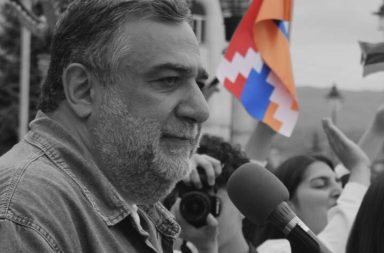
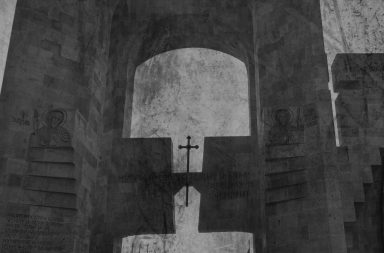
On December 18, a protest at Holy Etchmiadzin demanding the Catholicos’ resignation was decisively overwhelmed by a unified prayer service organized by supporters of the Armenian Apostolic Church.
The scene at the Mother See revealed a sharp physical and symbolic divide. Dissident bishops and supporters chanted “Ktrich Nersisyan, leave,” echoing Nikol Pashinyan’s use of the Catholicos’ birth name to undermine his authority, while supporters of Catholicos Karekin II gathered opposite them, singing the patriarchal hymn and awaiting his procession for evening prayer. Their chants were drowned out by the larger pro-Church crowd. When Navasard Kchoyan and other bishops were recognized, cries of “Judas” and “shame” followed.
The dissident clergy involved in the protest were transported to and from the site by Armenia’s National Security Service, reinforcing claims of state-level coordination via Pashinyan. The group stated that it had submitted a formal letter to the chancery demanding the Catholicos’ resignation before departing.
Inside the Mother Cathedral, Catholicos Karekin II warned that a kingdom divided against itself cannot stand. He emphasized Armenia’s severe security challenges and criticized continued attacks on the Church instead of efforts to restore unity and repair Church–state relations. He stated that the actions were carried out, regrettably, with the participation of certain clergy, and affirmed that neither pressure nor disruption would divert the Church from its mission.
That assessment was echoed by Fr. Vrtanes Priest Baghalyan, who said Catholicos Karekin II had repeatedly sought dialogue with the ten bishops involved, whom he described as “multi-faced” and united around an anti-Church agenda. He stated that the provocation had failed and that the Church would prevail. Near the end of the protest, Fr. Baghalyan was taken to hospital, where he underwent emergency surgery following a heart attack.
Notably, this marked the first instance of broad political convergence in defense of the Church. Political forces traditionally opposed to one another expressed support, underscoring the depth of resistance to the attempt.