On Monday February 9th, United States Vice President J.D. Vance landed in Armenia, marking a significant shift in the relationship between the two nations.
This visit follows the signing of a U.S. brokered peace agreement between Armenia and Azerbaijan this past August, a move that aimed to end conflict and establish a trade route between the two nations. To reward both Armenia and Azerbaijan for this decision, Vance visited both nations this week, making him the first sitting U.S. Vice President or President to visit the Republic of Armenia. Earlier last week, Nikol Pashinyan and Azerbaijani President Ilham Aliyev also traveled to Abu Dhabi to receive an award for their efforts to establish international peace and to discuss further efforts towards peace.
Armenia is being presented with modernization and investment, a civil nuclear framework worth up to $9 billion, new surveillance drones, and a growing partnership with the United States. But beneath the headlines, many questions remain.
During JD Vance’s February 9 visit to… pic.twitter.com/q2HfP99Mve
— 301🇦🇲 (@301arm) February 14, 2026
In a joint press conference on Monday night, Vance stated, “The great economic cooperation that we want to announce today would not have been possible without [Pashinyan’s] leadership, without the peace that you committed your country to, and without, of course, the President of the United States’ leadership.” This marks a growing allyship between the current U.S. administration and Nikol Pashinyan, which was further solidified through a nuclear energy pledge announced and signed that day. Vance pledged up to $9 billion USD in potential investment into Armenia, designating $5 billion in initial investments, then another $4 billion allocated in a second phase. For the United States, Armenia is a key pathway to involvement in the South Caucasus, especially with the implementation of the TRIPP trade route through Syunik. These projected figures of potential private investment from the United States were misinterpreted as a grant or aid directly coming from the U.S. government despite being simply a predicted sum of investments following the implementation of the TRIPP plan.
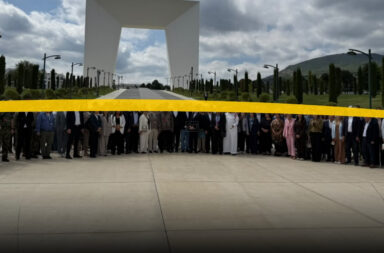
This deal aims to steer Armenian nuclear reliance away from Russia and the Soviet era Metsamor plant and towards the United States, which clearly echoes Armenia’s recent shifts towards stronger Western relations. The question of how genuine the United States’ engagement with Armenia is remains unanswered, along with the long term impacts of Vance’s financial pledges. The following day, JD Vance visited Tsitsernakaberd, the Armenian Genocide memorial site, to pay respects to the victims, however, he deleted all social media posts devoted to this visit shortly after, which is assumed to be a reaction to Azerbaijani and Turkish pressure. The Vice President’s respectful praisings of the Armenian people are clearly lip service, as his deleted posts highlight stronger sympathies with the Turkish and Azerbaijani government. Vance has since endorsed Pashinyan’s campaign for the upcoming elections.
Prior to his departure to Azerbaijan, Vance noted that the issue regarding the Armenian hostages that remain imprisoned in Azerbaijan would be brought up to Aliyev, however there are no concrete mentionings of any response or results from this conversation. According to reports, Vance and Aliyev discussed vague musings of peace in the region, the implementation of TRIPP, and prosperity through trade, with no elaborations regarding the hostages and no signed deals.
The United States has previously supported the Azerbaijani and Turkish military at length, and their strong allyship clearly continues with this visit from Vance. In Vance’s visit to Armenia though, he announced a major sale of military technology to Armenia that includes V-BAT reconnaissance drones valued at approximately $11 million, used primarily for target designation. Though this will strengthen Armenia’s military intelligence and diversify defense partnerships, these drones are mainly used for surveillance, battlefield awareness, and smaller improvements within existing assets, not directly for offensive or defensive attacks, which places them below tactical combat drones. The higher-tier drones used by Turkey, Bayraktar TB2, Anka, and Akıncı drones, are significantly more powerful, merging both surveillance and precision attack capabilities, and were developed under a broader military relationship with the West. Azerbaijan relied heavily on such drones in previous conflicts with Armenia, and though the United States’ recent sale of military technology to Armenia marks a clear improvement, it doesn’t compete with the military capabilities of Azerbaijan and Turkey.
While $9 billion worth of U.S. investments into Armenia, despite the fact that it isn’t direct government aid, could result in the potential flourishing of Armenia’s energy and tech sectors, it cannot overshadow the United States’ clear neglect of human rights violations committed by Azerbaijan, not can it be mistaken as genuine care for the Armenian people. Garnering Western allegiance and endorsements will ultimately aid Pashinyan’s Parliamentary campaign, but it won’t foster true, long lasting justice or peace between Armenia and Azerbaijan. Armenian hostages still remain imprisoned through sham trials in Baku, and broader historical injustices still go unrecognized on social media. Without justice and recognition for ethnic cleansing, displacement, and genocide, long term peace and fellowship cannot be established. Vance stated in his press conference in Armenia that “Peace is not made by cautious people. Peace is not made by people who are too focused on the past”, highlighting an intention to progress towards peace between Armenia and Azerbaijan with a deleted tweet about the Armenian Genocide on his record. JD Vance rushed to make claims about the past without any claims for justice whatsoever, only emphasizing economic returns for both nations, which speaks volumes to the perspective that informs his allyship. Without an acknowledgement of the oppressive history, displacement, and currently held hostages in Azerbaijan, the implementation of peace will occur on an ingenuine, short-term basis.