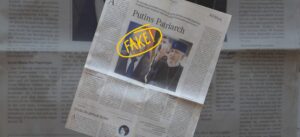
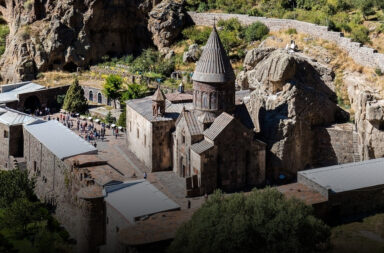
A 74-page report prepared on Nikol Pashinyan’s instructions says the state must not interfere in the Armenian Apostolic Church’s internal canonical life. It then proposes Karekin II’s departure, defines the role of an interim Church leader, sets out what a new Church constitution should contain and maps the process for electing the next Catholicos.
A 74-page report prepared on Nikol Pashinyan’s instructions has declared that the Armenian Apostolic Church is in crisis under Catholicos Karekin II and set out a five-stage roadmap that would ultimately replace him and restructure the Church’s internal governance.
The report was prepared by the Public Relations and Information Center under Pashinyan’s office as part of the government’s 2026-2031 program. Its authors say they relied exclusively on publicly available information. Throughout the document, Karekin II is repeatedly referred to not by his ecclesiastical title, but as the Church’s “de facto head.”
Pashinyan’s report identifies 16 alleged manifestations of a crisis, ranging from violations of celibacy and financial opacity to political activity, foreign influence, nepotism, misuse of Church property and failures in Church governance.
But the report mixes documented internal disputes with allegations and conclusions that the evidence it cites does not always establish.
Its first accusation is one of the clearest examples.
Pashinyan’s report states as fact that Karekin II violated his vow of celibacy and has a child, and argues that this makes his continued tenure incompatible with the canonical requirements of the Catholicos. Yet the supporting section relies heavily on years of media publications and statements by current and former clergy. It also repeatedly stresses that neither Karekin II nor the Mother See publicly denied the allegation.
The report does not present documentary or forensic evidence establishing paternity, such as a civil record, DNA result or admission by Karekin II.
The material cited establishes that the allegation has circulated publicly for years. It does not establish paternity. Pashinyan’s report nevertheless presents it as fact.
A similar jump appears in its treatment of Church finances.
Pashinyan’s report points to limited public financial disclosure and raises questions about businesses and property associated with members of Karekin II’s family. Its summary then states that Church activity produces a “huge shadow turnover” and says the family’s wealth raises reasonable suspicions.
But the report does not present a financial trail showing Church donations or Church assets being transferred to Karekin II or his relatives.
Limited financial transparency is one issue. Personal enrichment from Church funds is another. Pashinyan’s report raises the second without establishing the link between the two.
The same problem appears in its section on political activity.
Pashinyan’s report cites Archbishop Bagrat Galstanyan’s 2024 protest movement, opposition activity involving clergy and calls for Pashinyan’s resignation. It accuses Karekin II and a smaller circle of using Church structures for political mobilization.
But its own evidence shows how contested Galstanyan’s political role was inside the Church.
Citing Bishop Gevorg Saroyan, the report says 24 bishops discussed whether Galstanyan should begin a political movement and 20 opposed it, considering such activity uncanonical. The report itself acknowledges that the alleged politicization was not the collective decision of the episcopate and attributes it instead to Karekin II and a smaller group.
Its case therefore depends on establishing that Karekin II overrode opposition from most bishops and turned the actions of individual clergy into a position attributed to the Church itself.
Pashinyan’s report makes another substantial leap in its section on foreign influence.
The section begins with allegations involving Archbishop Ezras Nersisyan, including information attributed to Armenia’s National Security Service concerning alleged Soviet-era KGB recruitment and contacts with representatives of foreign intelligence services. It then expands that into a conclusion that Karekin II and members of his family use the Armenian Apostolic Church to spread foreign influence in Armenia.
The allegations cited concern Ezras Nersisyan. The report extends them to Karekin II, his family and the Armenian Apostolic Church as an institution.
It does not establish the chain of evidence connecting those claims.
Another passage in Pashinyan’s report has already been directly challenged by Archbishop Arshak Khachatryan’s lawyer.
Discussing intimate videos attributed to Khachatryan, the report says their authenticity was confirmed through an examination. Arsen Babayan, who represents Khachatryan in the criminal proceedings connected with the videos, responded on Sept. 24 that the report contains “openly false information.” He said the defense had obtained three international expert examinations which concluded, according to him, that the videos were fake.
The Investigative Committee has separately said that an audio-video and portrait forensic examination conducted in the criminal proceedings confirmed the authenticity of the footage and established that Khachatryan was depicted in it. The Committee has rejected the defense-commissioned examinations as having no evidentiary value within the criminal proceedings because they were obtained outside the procedure prescribed by Armenian criminal law.
Babayan’s statement therefore directly challenges a conclusion Pashinyan’s report presents as settled. With expert findings being disputed by the defense, the report nevertheless adopts the prosecution-side conclusion without reflecting that dispute in its finding.
These are not isolated allegations included for background. They form part of the case Pashinyan’s report uses to declare an institutional crisis and propose what should happen to the Church’s leadership.
The confrontation, however, did not begin with this report, or even with the criminal cases that followed.
The Armenian Apostolic Church had become one of the most prominent institutional critics of Pashinyan’s policies following the 2020 Artsakh War.
The shift is visible in the public record.
On Oct. 27, 2020, while the war was still underway, Karekin II met Pashinyan and expressed the Church’s support for the governments of Armenia and Artsakh in what the government itself described as the struggle to protect the Artsakh Armenians’ right to a free and independent life.
Six weeks later, after the war and the November 9 agreement, Karekin II publicly urged Pashinyan to resign. He cited the loss of a significant part of Artsakh, serious external threats, internal instability and diminished public confidence in Pashinyan.
The criticism continued.
Following Azerbaijan’s September 2023 military attack and the forced displacement of Artsakh’s Armenian population, Karekin II said that Azerbaijan’s actions, the international community’s inadequate response and “the policy adopted by the authorities of the Republic of Armenia towards Artsakh” had led to the loss of Artsakh.
The Church then became an outspoken critic of the territorial concessions in Tavush in 2024.
In April 2024, Armenian bishops and diocesan leaders accused the authorities of yielding to Azerbaijani pressure and preparing to transfer territories before a full delimitation process. They described the government’s attempt to achieve peace through what they called unilateral concessions as “disastrous.”
As opposition to the Tavush process grew, bishops accused Pashinyan and other officials of increasingly targeting the Church. In May, they said government representatives, including Pashinyan, had begun attacking the Church with accusations at the same time that public opposition to the territorial concessions was intensifying.
The Supreme Spiritual Council again criticized the government in June 2024, saying its post-war policies, particularly what it described as unilateral territorial concessions, had created serious security concerns and generated demands for Pashinyan’s resignation.
The chronology does not by itself establish why subsequent criminal cases were opened or why Pashinyan later made Church “reform” part of his political agenda. But it establishes that the current confrontation followed years in which the Church leadership repeatedly challenged some of the most consequential policies of his government on Artsakh, Azerbaijan and territorial concessions.
Pashinyan’s report largely presents the Church’s political role as part of the problem. It gives far less weight to what that political criticism was about.
The report was also produced after more than a year of criminal cases involving senior figures of the Armenian Apostolic Church.
Between June and December 2025, at least 16 distinct Armenian Apostolic clergy were detained or arrested in several investigations.
Archbishop Bagrat Galstanyan was arrested in June 2025 after authorities accused members of his movement of preparing terrorism, mass unrest and a violent seizure of power. Galstanyan denied the accusations. Authorities said 16 people were indicted and 14 initially placed under arrest, with the number later reported as 15 in pretrial detention.
Archbishop Mikael Ajapahyan was arrested days later over statements prosecutors said amounted to calls for the seizure of power. He denied the charge.
In October 2025, Bishop Mkrtich Proshyan and 12 priests from the Aragatsotn Diocese were detained following allegations connected with interference in political participation during the 2021 election period. Proshyan and priest Garegin Arsenyan were placed in pretrial detention. The clergy denied wrongdoing.
Archbishop Arshak Khachatryan was arrested in December in a separate criminal case.
The figure of 16 refers to clergy who were detained or arrested at some point in those cases. It does not mean 16 clergy remain imprisoned.
Karekin II and six bishops are now themselves defendants in a criminal case over the alleged failure to comply with a civil court ruling temporarily reinstating Bishop Gevorg Saroyan as head of the Masyatsotn Diocese. Authorities have also barred Karekin II from leaving Armenia. The clergy deny wrongdoing and argue that secular courts do not have jurisdiction over the internal Church matter at the center of the case.
Pashinyan’s report cites criminal proceedings involving clergy when those proceedings support its conclusions. What it does not do is treat the scale of arrests, prosecutions and restrictions involving Church figures as a separate factor in explaining the confrontation it describes primarily as a crisis inside the Church.
The Mother See says the premise itself is wrong.
Responding to the report on Sept. 24, the Mother See called it “unconstitutional, anti-canonical and illegal” and described it as political retaliation, vindictiveness and interference in the Church’s internal life.
It said the document had been assembled from accusations and what it described as defamatory claims published through social media and news outlets, and accused the authorities themselves of making efforts to create an “artificial crisis” inside the Church.
The statement said Church reform cannot be dictated through political pressure or coercion and must be carried out through the Church’s highest canonical bodies.
That position predates publication of Pashinyan’s report. In August, the Supreme Spiritual Council said authorities were making false accusations against the Church, including portraying it as an “agent of foreign influence,” a “party of war” and a “security threat,” and accused them of creating artificial pretexts for interference in Church affairs.
Only days before the report appeared, the Council again accused authorities of using state mechanisms to interfere in the Church’s internal life and pressure clergy.
At the same time, senior figures in Azerbaijan have increasingly targeted the Armenian Apostolic Church in their own rhetoric.
Sheikh-ul-Islam Allahshukur Pashazade, chairman of Azerbaijan’s Caucasus Muslims Board, said during meetings with U.S. officials in Washington in October 2025 that the Armenian Church and Diaspora were hindering the peace process and promoting “revanchist tendencies.” He argued that religious and civil institutions should instead support political leaders pursuing the peace process.
Months earlier, Pashazade had gone further, portraying the Armenian Apostolic Church as a threat to countries in the region and making claims concerning Armenian religious sites, including Holy Etchmiadzin. The Mother See accused him of spreading Azerbaijani disinformation and directing hostile rhetoric against the Armenian people and Church.
Aliyev has separately used increasingly severe rhetoric about what he calls “revanchism” and “fascism” in Armenia. In January 2025, he called Armenia a “fascist state” and said what he described as fascism “must be eradicated,” adding that either Armenia’s leadership would eliminate it “or we will.”
Aliyev did not identify the Armenian Apostolic Church in that statement. Pashazade, however, has explicitly placed the Church among the Armenian institutions he accuses of obstructing the peace process and promoting revanchism.
There is no evidence presented here of coordination between Yerevan and Baku over the Church.
The overlap is nevertheless significant. Senior Azerbaijani figures are publicly portraying the Armenian Apostolic Church as an obstacle to the political settlement they seek while Pashinyan’s government is simultaneously building a formal case against Church leadership that has repeatedly criticized his policies toward Azerbaijan, Artsakh and territorial concessions.
The central contradiction in Pashinyan’s report appears in its final pages.
The report says reform must be carried out by the Church itself and that the state should act within its constitutional powers without interfering in the Church’s doctrinal and canonical autonomy.
It then lays out what should happen next.
The second stage of its roadmap calls for the removal or retirement of the Church’s “de facto head.” The next stage proposes the selection of a locum tenens and sets out that interim leader’s mandate, including preparation of a National Ecclesiastical Assembly, work on a unified Church constitution, review of disciplinary cases, financial and property oversight and elections within Church structures.
Pashinyan’s report also proposes conditions for the future Church governance system and ultimately the election of a new Catholicos under the revised framework.
This goes far beyond documenting alleged problems.
Armenian law states that the state does not interfere in the Church’s lawful activities and internal life and prohibits state bodies, or people carrying out their instructions, from operating within the structures of religious organizations. The Constitution separately states that religious organizations are autonomous.
Pashinyan’s report itself says those principles should be respected.
Yet the same report, prepared on his instructions by a body under his office, proposes the departure of the Catholicos, defines what should happen after he leaves, sets conditions for an interim Church leader, proposes changes to the Church’s governing framework and sets out the process that should culminate in the election of another Catholicos.
The broader political context is also difficult to separate from that effort. The Church supported the authorities while Artsakh was at war in 2020. After the war, it called for Pashinyan’s resignation. After the loss of Artsakh in 2023, it directly blamed his government’s policy as one of the factors that led to that outcome. In 2024, it publicly opposed further territorial concessions. Criminal cases, arrests and the government’s Church “reform” agenda followed.
That chronology does not prove motive. It does, however, make it impossible to present the current confrontation as though it emerged simply from a neutral examination of longstanding internal Church problems.
A disputed allegation does not become established because it has circulated for years or because its subject has not issued the public denial Pashinyan’s report considers sufficient. Limited financial transparency does not itself establish private enrichment. Allegations concerning one senior clergyman do not establish that the Catholicos, his relatives and the Church itself operate as instruments of foreign influence. And the existence of a criminal case does not itself establish the accusations on which that case is based.
Pashinyan’s report uses those claims and conclusions to support a proposed change in Church leadership and governance.
It is therefore not simply a report examining problems inside the Armenian Apostolic Church. It is a state-produced roadmap for changing who leads the Church and how it is governed, published after years of increasingly direct conflict between Pashinyan’s government and a Church leadership that repeatedly challenged his policies on Artsakh, Azerbaijan and territorial concessions.
RELATED
Pashinyan’s Government to Publish Armenian Church “Crisis” Report Within a Month as Campaign to Remove Catholicos Intensifies
Pashinyan’s Five-Year Plan Seeks to Rewrite Armenia’s Foundations, Abandon Artsakh Agenda and Reshape Church, Security and Foreign Policy