Narek Karapetyan, coordinator of the “Strong Armenia” party, says his party would declare an amnesty if it comes to power, calling it a response to politically motivated prosecutions under Pashinyan’s government.
The proposal comes as the number of political prisoners continues to rise as elections approach. Armenia last implemented an amnesty in 2018, immediately after Pashinyan came to power, following one in 2013. Nearly a decade later, Pashinyan’s government rejects any need for another. Justice Minister Srbuhi Galyan has made that position explicit.
Over the past year, Pashinyan’s government has applied systematic legal pressure across political, religious, and civic spheres, using arrests, pre-trial detention, house arrest, and travel bans.
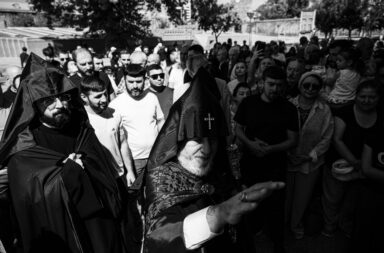
The escalation became particularly visible in June 2025, when security forces carried out coordinated arrests of opposition figures and senior clergy. Archbishop Bagrat Galstanyan was detained along with 17 others under coup-related accusations. The pattern has since extended to local government, including the arrest of former Masis mayor Davit Hambardzumyan and Gyumri mayor Vardan Ghukasyan, alongside the detention of opposition activists and protest participants.
The crackdown has since expanded. Archbishop Mikael Ajapahyan was detained and later placed under house arrest, while Archbishop Arshak Khachatryan and Bishop Mkrtich Proshyan have faced prosecution. Travel bans have further restricted the movement and public activity of senior clergy, including the Catholicos of All Armenians.
The same pattern extends beyond the Church. Businessman Samvel Karapetyan was arrested after publicly defending the Church and remains under house arrest. His arrest forced his entry into politics, and his team has since been systematically targeted by ongoing legal and political pressure.
Calls for an amnesty have resurfaced as detentions expand, with opposition figures arguing it is necessary to address selective justice. Pashinyan’s government continues to reject such proposals, even as the broader pattern shows a sustained effort to pressure dissent while authorities deny any political motivation.