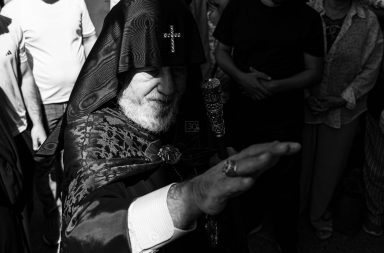
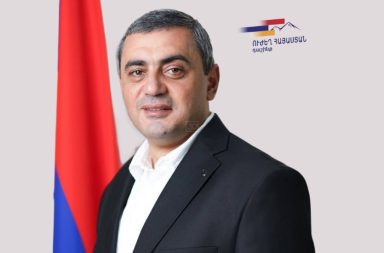
A court has ruled that defrocked former priest Stepan Asatryan defamed Archbishop Mikael Ajapahyan, ordering him to publicly retract his false claims and pay 1 million drams (about $2,740) in compensation.
The case stems from a January 22, 2026 interview with Haykakan Zhamanak, during which Asatryan claimed that Ajapahyan had encouraged terrorism, threatened Armenia from prison, and had a wife and daughter.
The court ordered Asatryan to publish the following retraction:
“I, Stepan Asatryan, publicly state that the claims I made during an interview at Haykakan Zhamanak on January 22, 2026, that Mikael Ajapahyan encouraged terrorism, made threats against the Republic of Armenia from prison, and has a wife and daughter, are outright false and do not correspond to reality. With this statement, I retract the above-mentioned defamatory claims made by me.”
Asatryan, formerly known as Fr. Aram Asatryan, was defrocked by the Armenian Apostolic Church on October 21, 2025, following repeated disciplinary violations, including public attacks on the Church and fellow clergy, refusal to follow instructions from his diocesan leadership, and failure to appear before a disciplinary commission.
He has since refused to leave Hovhannavank or hand over the monastery’s keys and continues to hold services there despite no longer being recognized by the Church as a priest.
Asatryan subsequently received open backing from Nikol Pashinyan and senior government officials and has remained closely aligned with Pashinyan’s push to reshape the leadership and governance of the Armenian Apostolic Church, presented by Pashinyan as a program of Church “reform” and “renewal.”
The ruling is significant against the backdrop of Pashinyan’s campaign against the Armenian Apostolic Church. Archbishop Ajapahyan has been among the senior Church figures targeted during that campaign, while Asatryan has become one of the most visible former clergymen publicly aligned with Pashinyan. A court has now found that some of the claims Asatryan used against Ajapahyan were false and defamatory, directly undermining part of the narrative pushed by figures backing Pashinyan’s attack on the Church leadership.