Nestled atop a rocky plateau in the heart of Artsakh, Shushi has long been a cultural beacon and spiritual stronghold for Armenians. Surrounded by ravines from three sides and a fifty-towered wall from the fourth, it became home to more than 43,000 people. It served not only as a geographical fortress but also as a sanctuary for Armenian identity, faith and artistry.
The city got its name from the nearby town of Shosh, which is what the locals call ‘young trees’, reflecting the resilience and renewal that Shushi has come to symbolise.
Despite the chaos that reigned in eastern Armenia, the safety provided by Shushi’s geography, led to the creation of a beautiful and unique city, which thrived in culture and history.
In 1906, Turks took advantage of the weakening of the Christian Russian Empire, turning the streets of the city into a battleground. Lasting six days, the city endured devastation before the attackers were repelled, but not without a heavy price – hundreds of buildings were burned to the ground, and a dark chapter was opened.
In 1920, from March 22–26, the Armenian population of Shushi, Artsakh, faced one of the most devastating massacres in modern Armenian history. Known as the Shushi Massacre, this systematic attack was carried out by Caucasian Tatar forces (modern-day Azerbaijanis) with the support of the Musavat regime. Tens of thousands of Armenians were brutally murdered. The city’s churches were set on fire, and its rich cultural fabric — including schools, libraries, and other institutions — was deliberately destroyed.
In 1919, Artsakh was declared an inseparable part of Armenia through resolutions passed by the 4th and 5th Armenian Congresses of Artsakh. However, Azerbaijani authorities, aligned with the Young Turks and led by Governor Khosrov Sultanov, adopted genocidal policies reminiscent of the Armenian Genocide of 1915. Their goal was clear: to eliminate the Armenian presence in the region.
On March 23, 1920, under the false pretense of disarmament, armed forces — including Turkish officers, Tatar soldiers, Kurdish militants, and extremist mobs — entered the Armenian quarter of Shushi and unleashed a new wave of massacres. The city was set ablaze. Shushi, once a thriving Armenian cultural center, was reduced to ashes. Of the once-vibrant Armenian community, only around 5,000 to 6,000 people survived, fleeing to Varanda and Dizak.
Today, 1920, Shushi and other parts of Artsakh remain under occupation. In 2023, the Armenian population of Artsakh was ethnically cleansed and forcibly displaced. The region continues to face cultural genocide, as centuries of heritage and presence are threatened with erasure.
The legacy of 1920 is not forgotten — it stands as a reminder of the resilience of a people who have endured atrocity, and of the continued urgency to protect memory, history, and human rights.
Posted by 301 on Saturday, March 22, 2025
The catastrophe deepened in 1920. Amid the larger context of the Armenian Genocide, Shushi’s 18 Armenian quarters were systematically destroyed. On March 26th, the city was set ablaze. Once a White City renowned for its architecture, art and spirituality, Shushi was reduced to ashes. Nearly 20,000 Armenians were massacred, their lives and history extinguished in a single horrific act.
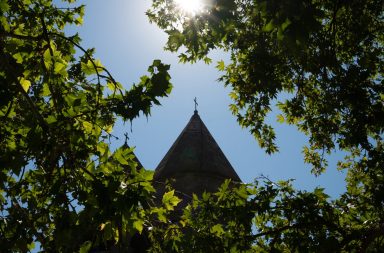
Out of its 12 churches, only two survived the carnage. Today, following the events of 2023, just one still stands – defaced, but not forgotten.
Shushi was first occupied on November 7, 2020 during the Second Artsakh War, marking a profound turning point in the city’s fate. In 2023, the occupation intensified with the forced displacement of the Armenian population of Artsakh, leaving Shushi stripped of its native people and vulnerable to a systematic cultural genocide.
Though much of Shushi now lies in ruin, its spirit endures forever. Its history remains engraved into the collective memory of Armenians as a reminder of resilience in the face of destruction. Today, there are forces still determined to erase Shushi’s Armenian identity, to dismantle its cultural and historical heritage. But they will not succeed. For what was built with centuries of faith and struggle cannot be undone by force.
Stones may fall, churches may be defaced but history remembers. The legacy of Shushi lives on and will continue to inspire generations to come.