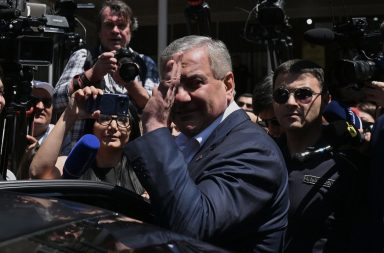
Armenia’s National Security Service (NSS) officers escorted opposition “Strong Armenia” party leader and businessman Samvel Karapetyan away from his residence on November 4, amid a large-scale operation involving searches at 65 locations and new allegations of financial crimes connected to Electric Networks of Armenia (ENA).
The Investigative Committee alleges that Karapetyan organized financial offenses between 2016 and 2024 that caused ENA approximately 64.5 billion AMD ($180 million) in damages. Criminal prosecution has been initiated against 36 individuals in connection with the investigation.
According to reports from the scene, masked NSS officers escorted Karapetyan through the rear entrance of his home and transported him away in a vehicle. Supporters gathered outside chanted his name as tensions escalated around the property.
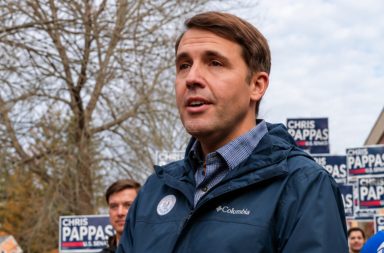
His nephew, Narek Karapetyan, who heads the “Strong Armenia” parliamentary faction, condemned the operation and accused the authorities of acting out of fear.
Referring to Nikol Pashinyan, Narek Karapetyan said repeated attempts to target his uncle had failed and would continue to fail. He also accused Pashinyan of following the demands of Armenia’s enemies.
Speaking after his uncle was driven away, Narek Karapetyan said he did not know where security officers had taken him.
The searches began early Wednesday morning at the homes of Samvel and Narek Karapetyan, as well as other properties linked to the family, according to party spokesperson Aghavni Sukiasyan.
The Investigative Committee confirmed simultaneous searches at 65 addresses as part of proceedings handled by its Main Department for the Investigation of Economic Crimes and Smuggling.
In a subsequent statement explaining the operation, the committee alleged that several individuals, acting under Samvel Karapetyan’s direction, committed four episodes of abuse of authority in the private sector between 2016 and 2024.
Investigators also alleged particularly large-scale misappropriation of entrusted property and money laundering. According to the committee, the suspected offenses caused ENA losses totaling approximately 64.5 billion AMD.
The committee announced that public criminal prosecution had been initiated against 36 individuals.
The allegations have not been established by a final court judgment. Karapetyan has previously denied allegations of financial wrongdoing and maintained that proceedings against him are politically motivated.
According to former lawmaker Karen Karapetyan, this was the third search of Samvel Karapetyan’s residence and the fourth of Narek Karapetyan’s home this year. Investigators also reportedly confiscated computers belonging to Narek Karapetyan’s children.
National Assembly Deputy Speaker Aram Vardevanyan, speaking outside Samvel Karapetyan’s residence, reported the presence of NSS officers and special forces vehicles. He accused Pashinyan’s government of conducting a politically motivated operation.
Vardevanyan said the searches lacked legal justification, describing them as the result of political orders and instructions. He suggested that the operation could be connected to the opposition’s refusal to support constitutional changes.
The latest operation comes more than a year after Samvel Karapetyan’s initial arrest on June 18, 2025, shortly after he publicly defended the Armenian Apostolic Church amid Pashinyan’s campaign against its leadership.
Prosecutors initially accused Karapetyan of publicly calling for the seizure of power and the violent overthrow of the constitutional order. Subsequent criminal proceedings included allegations of money laundering, tax evasion, and fraud.
Shortly after his arrest, Pashinyan announced plans to nationalize ENA, the country’s electricity distribution company, which was controlled by Karapetyan’s Tashir Group.
In July 2025, Pashinyan’s government adopted legislation enabling state intervention in ENA and subsequently installed a state-appointed manager, removing the existing management from control.
The takeover proceeded despite an emergency arbitration ruling issued on July 22, 2025, through the Arbitration Institute of the Stockholm Chamber of Commerce.
The emergency arbitrator ordered Armenia to refrain from further measures aimed at expropriating ENA under the Armenia-Cyprus bilateral investment treaty.
As 301 previously reported, the ruling provided temporary protection against measures targeting the company’s ownership and management. It did not constitute a final judgment on the underlying investment dispute.
Nevertheless, the takeover continued. In November 2025, ENA’s electricity distribution license was revoked.
On October 15, 2026, Pashinyan’s government approved a decision declaring 100% of ENA’s shares subject to acquisition for overriding public interest, advancing the nationalization process. The formal ownership transfer remains incomplete.
Amid the criminal proceedings and takeover of ENA, Karapetyan entered politics in July 2025, launching a movement that later became the “Strong Armenia” party.
In February 2026, the party formally nominated him as its candidate to lead the government.
After spending more than six months in pretrial detention, Karapetyan was placed under house arrest on December 30, 2025, with bail set at 4 billion AMD.
However, on January 16, 2026, an appeals court overturned that decision and ordered his return to an NSS detention facility.
As 301 reported at the time, the ruling came just 17 days after Karapetyan had been transferred from detention to his residence.
He was subsequently placed under house arrest again, with restrictions extended during 2026.
The November 4 operation also comes days after Pashinyan publicly called for pressure against parliamentary opposition forces refusing to support a constitutional referendum linked to Azerbaijan’s demands.
On October 29, Pashinyan raised the possibility of demonstrations outside parliament and snap parliamentary elections if opposition lawmakers continued blocking the referendum.
On November 2, he reiterated that his ruling “Civil Contract” party should lead public pressure against opposition lawmakers if they refused to support the constitutional process under the conditions he outlined.
As 301 reported on November 2, “Civil Contract” lacks the two-thirds parliamentary majority required to authorize a constitutional referendum, making opposition votes necessary.
Azerbaijan has repeatedly demanded constitutional changes before signing a peace agreement, while parliamentary opposition factions have rejected the proposed referendum.
Vardevanyan has suggested that the latest operation targeting Karapetyan could be connected to the opposition’s resistance to those changes. No evidence establishing such a connection has been made public.
Although the Investigative Committee has now identified the alleged financial offenses behind the searches, authorities have not clarified where Samvel Karapetyan was transported or whether a new court decision has altered the terms of his house arrest.