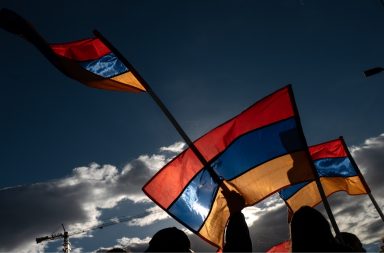
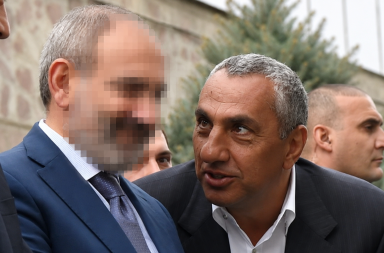
Representatives of Armenia’s opposition political forces and legal community gathered in Yerevan on November 9 as part of the nationwide unity initiative, warning that constitutional changes demanded by Azerbaijani President Ilham Aliyev could threaten Armenia’s sovereignty and independence.
The meeting brought together representatives of several opposition forces, including Levon Zurabyan, Avetik Chalabyan, Mane Tandilyan, Tigran Abrahamyan of the “Republican Party of Armenia,” Suren Surenyants, Arthur Danielyan, and constitutional law expert Gohar Meloyan, alongside other political and legal figures.
During the gathering, Liana Gasparyan of “Strong Armenia” questioned why Armenia was being pressured to change its Constitution while Azerbaijan’s own constitutional foundations raise concerns about historical territorial claims.
Gasparyan pointed to Azerbaijan’s references to the state that existed between 1918 and 1920, arguing that Baku could use those historical claims to justify further demands concerning Armenian territory, including Syunik, Gegharkunik, and Vayots Dzor.
“What would prevent Azerbaijan from demanding further concessions from Armenia, for example, regarding Vayots Dzor, Syunik, or Gegharkunik?” she asked, warning that constitutional concessions could open the door to additional demands from Baku.
Arthur Danielyan, also a member of “Strong Armenia,” warned that holding a referendum on constitutional changes demanded by Azerbaijan could have serious consequences regardless of the outcome.
He argued that Armenian voters had not given the parliamentary majority a mandate to submit a new Constitution to a referendum. According to Danielyan, approving such changes under Azerbaijani pressure would undermine the foundations of Armenia’s independence, while rejecting them could allow Baku to portray Armenians as having territorial claims and being unwilling to pursue peace.
The concerns were echoed by Anna Grigoryan, head of the “Armenia” parliamentary faction, who stated separately on November 9 that either outcome of such a referendum could be damaging to Armenia.
Grigoryan emphasized that the process must be stopped at the parliamentary stage, noting that constitutional procedures require the necessary approval in the National Assembly before a proposal can be submitted to a referendum.
She reaffirmed that her faction would not vote in favor of constitutional changes demanded by Aliyev, stressing that Armenia’s fundamental law must not be rewritten at the insistence of another state.
The November 9 gathering follows the November 4 meeting of opposition political forces, which resulted in a joint declaration calling for nationwide unity.
The participating forces agreed to coordinate their efforts around four priorities: rejecting Aliyev’s constitutional demands, pursuing peace without unilateral concessions or territorial losses, protecting Armenian national identity and the Armenian Apostolic Church, and restoring democratic rights and freedoms.
The initiative has since expanded beyond political meetings. On November 8, opposition representatives launched a coordinated public awareness campaign across Yerevan, visiting metro stations, distributing informational materials, and speaking directly with residents about the constitutional dispute.
Aliyev has repeatedly demanded changes to Armenia’s Constitution, particularly targeting its preamble, which references the 1990 Declaration of Independence. The declaration, in turn, cites the December 1, 1989 decision on the reunification of Armenia and Artsakh.
The November 9 gathering marks another stage in efforts to bring political forces and legal professionals together against constitutional changes demanded by Azerbaijan, with participants warning that even holding a referendum could expose Armenia to f