Azerbaijan says frescoes and cross-stones (khachkars) removed from Dadivank, the centuries-old Armenian monastery in Artsakh, were entered into Interpol’s Stolen Works of Art database in October 2025 and says it will seek their return if they are found abroad.
Sabina Hajiyeva, head of Azerbaijan’s State Service for Protection, Development and Restoration of Cultural Heritage, accused Armenians of “looting” Dadivank before leaving Karvachar, claiming crosses, bells and other church objects were taken to Armenia and frescoes removed from the monastery walls. She said information on the frescoes and khachkars was added to Interpol’s database on October 9, 2025.
Dadivank is one of Artsakh’s most significant medieval Armenian monasteries. Its main church, built in 1214 by Princess Arzu Khatun, bears a lengthy Armenian inscription, while Armenian inscriptions, frescoes and khachkars remain throughout the complex.
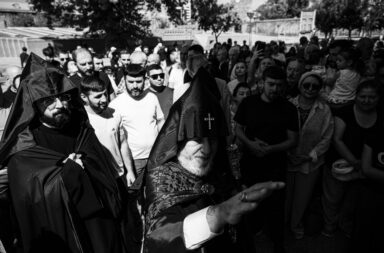
Armenians were forced to leave Karvachar under the November 2020 capitulation agreement following the 2020 Artsakh War. As that deadline approached, the Mother See of Holy Etchmiadzin said prominent cross-stones were removed from Dadivank for preservation. Armenian clergy nevertheless continued serving at the monastery under Russian peacekeeper protection until September 24, 2023, when its last Armenian abbot celebrated his final liturgy before being forced out following the forced displacement of Artsakh’s Armenian population.
Azerbaijan now describes the objects as stolen and is invoking Interpol to seek their return. But inclusion in Interpol’s Stolen Works of Art database does not itself establish ownership or independently prove that an object was stolen. The information is submitted by national authorities and other authorized entities.
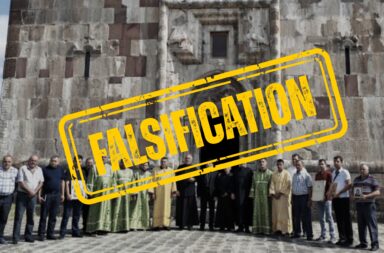
The claim comes as Azerbaijani officials continue efforts to strip Dadivank of its Armenian identity and present it as “Caucasian Albanian.” The Mother See recently condemned similar claims concerning Dadivank and Gandzasar as a “blatant falsification” and an attack on Armenian historical memory and spiritual heritage.